
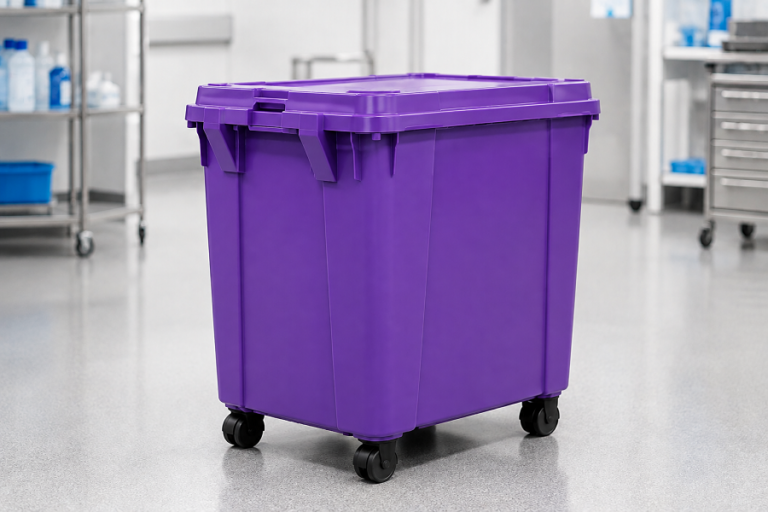
Expired medications should never be thrown into regular trash or flushed down the drain unless official disposal guidance specifically allows it. The safest option is to use approved medication take-back programs or work with a licensed waste disposal provider if you are a healthcare facility. Proper pharmaceutical waste management helps protect public health, prevents environmental contamination, and supports regulatory compliance for businesses that generate pharmaceutical waste.
Whether you manage a hospital, medical clinic, dental office, pharmacy, or veterinary practice, understanding the right disposal process can reduce risks and help your organization stay compliant with federal and state regulations.
Why Proper Medication Disposal Matters
Unused and expired medications can create serious problems when they are disposed of incorrectly. Prescription drugs, over-the-counter medications, controlled substances, and chemotherapy drugs may contain chemicals that can contaminate water systems, harm wildlife, or pose risks to people if they end up in the wrong hands.
Healthcare facilities also have legal responsibilities to manage pharmaceutical waste according to federal, state, and local regulations. Working with an experienced provider like Mercy Medical Waste helps ensure medications are handled safely from collection through final disposal.
Improving your Pharmaceutical Waste Management program also supports workplace safety, environmental responsibility, and regulatory compliance.
What Types of Medications Require Special Disposal?
Not every medication can be handled the same way. Different drugs have different disposal requirements based on their ingredients and potential risks.
Common examples include:
- Expired prescription medications
- Controlled substances
- Chemotherapy medications
- Vaccines
- Injectable medications
- Narcotics
- Antibiotics
- Hormonal medications
- Over-the-counter medicines
- Veterinary pharmaceuticals
Each category may require different handling procedures before transportation and destruction.
Why You Should Never Flush Most Medications
Many people assume flushing medication is the easiest option. In reality, this should only be done when specifically instructed by the FDA for certain high-risk medications.
Flushing most medications can:
- Contaminate rivers and lakes
- Affect drinking water supplies
- Harm aquatic wildlife
- Introduce pharmaceutical chemicals into wastewater treatment systems
Instead, use approved collection programs or licensed disposal services whenever possible.
How Healthcare Facilities Should Dispose of Expired Medications
Hospitals, surgery centers, pharmacies, long-term care facilities, dental offices, and physician practices generate pharmaceutical waste every day. These organizations must follow strict disposal procedures.
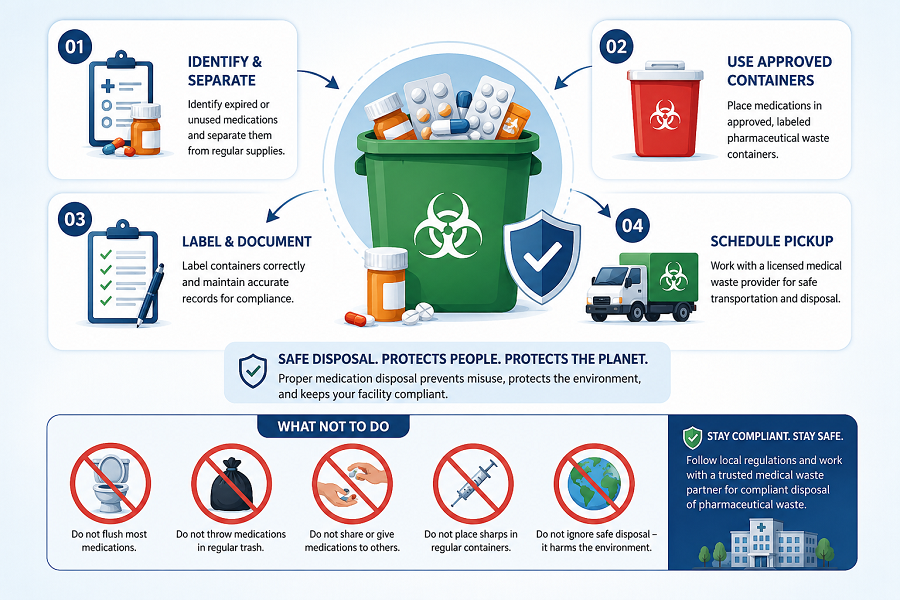
A proper disposal process generally includes:
- Identifying expired or unusable medications.
- Separating hazardous from non-hazardous pharmaceutical waste.
- Placing waste into approved collection containers.
- Labeling containers correctly.
- Scheduling pickup with a licensed disposal company.
- Maintaining required disposal documentation.
A reliable pharmaceutical waste management programme helps facilities reduce compliance risks while maintaining safe operations.
Choosing the right disposal provider is just as important as following proper handling procedures. Learn how to choose the right medical waste disposal service for your clinic.
Need a dependable solution for expired medication disposal? Contact Mercy Medical Waste today to schedule compliant pharmaceutical waste collection for your healthcare facility.
What About Medications at Home?
Homeowners often wonder what to do with expired medications sitting in medicine cabinets.
The safest options include:
- Community medication take-back events
- Authorized pharmacy collection kiosks
- Permanent medication drop-off locations
- Mail-back disposal programs where available
If no approved collection program is available, always follow your local health department’s disposal recommendations.
Never share expired medications with family or friends, even if they appear safe to use.
Pharmaceutical Waste vs Medical Waste
Many people confuse pharmaceutical waste with general medical waste, but they are not the same.
| Pharmaceutical Waste | Medical Waste |
|---|---|
| Expired medications | Blood-soaked materials |
| Controlled substances | Infectious waste |
| Vaccines | Laboratory waste |
| Chemotherapy drugs | Pathological waste |
| Prescription medications | Sharps and needles |
Facilities often need both medical waste disposal management and pharmaceutical disposal services to remain compliant.
Where Do Sharps Fit Into Medication Disposal?
Needles, syringes, lancets, and auto-injectors should never be thrown into household trash.
Instead, they should be placed into approved sharps containers before disposal.
Many healthcare providers and businesses search online for sharps disposal near me when they need compliant collection services. Licensed providers can supply approved containers and schedule routine pickups.
Proper sharps container disposal reduces the risk of accidental needle-stick injuries for employees, sanitation workers, and the public.
Need help handling needles and syringes safely? Read our guide on sharps disposal for clinics, laboratories, and veterinary practices.
Hospital Medication Disposal Requirements
Hospitals generate large volumes of expired medications every year.
Their disposal plans often include:
- Secure pharmaceutical waste containers
- Inventory tracking
- Employee training
- DEA-compliant controlled substance destruction
- Scheduled waste pickups
- Documentation for regulatory inspections
Proper hospital medical waste disposal programmes help hospitals safely manage medications while reducing compliance risks and protecting staff.
Managing pharmaceutical waste across multiple departments? Mercy Medical Waste offers scheduled pickups and compliant disposal solutions designed for healthcare facilities of every size.
HIPAA and Medication Disposal
Medication disposal is not only about environmental safety.
Patient privacy also matters.
Prescription labels, medication packaging, and pharmacy records may contain protected health information (PHI).
Healthcare facilities should include HIPAA waste disposal procedures when disposing of:
- Prescription labels
- Medication records
- Patient medication lists
- Pharmacy paperwork
- Printed prescription information
Destroying confidential information properly helps reduce the risk of HIPAA violations.
Common Mistakes to Avoid
Many disposal problems happen because staff members simply don’t know the correct procedures.
Avoid these common mistakes:
- Throwing medications into regular trash
- Mixing hazardous and non-hazardous pharmaceuticals
- Flushing medications without official guidance
- Using damaged disposal containers
- Overfilling sharps containers
- Skipping required documentation
- Ignoring employee training
- Delaying disposal of expired inventory
Routine staff education can help prevent these issues before they become compliance concerns.
Want a broader overview of regulated healthcare waste? See our guide on proper medical waste disposal in healthcare facilities.
Choosing a Medical Waste Disposal Partner
Not every waste disposal company offers pharmaceutical disposal services.
When evaluating providers, consider whether they offer:
- Licensed transportation
- Scheduled pickups
- Pharmaceutical waste expertise
- Regulatory documentation
- OSHA compliance support
- Flexible service plans
- Secure waste tracking
- Customer support for compliance questions
Healthcare organizations often benefit from working with one provider that can handle medical waste disposal, pharmaceutical waste, and sharps collection together.
Providers that also offer biohazard waste disposal services can simplify waste management by coordinating multiple regulated waste streams under one service plan.
Ready to simplify pharmaceutical waste disposal? Request a customized service plan from Mercy Medical Waste and keep your facility compliant with dependable scheduled pickups.
Frequently Asked Questions
Can expired medications go in household trash?
In most cases, no. Approved take-back programs or licensed disposal services are the safest option. Follow local guidance if no collection program is available.
How often should healthcare facilities dispose of expired medications?
Facilities should routinely inspect inventory and remove expired medications before they accumulate. Many organizations schedule regular pickups with licensed disposal providers.
Are controlled substances handled differently?
Yes. Controlled substances are subject to additional federal regulations and often require specific destruction procedures.
Can one provider manage multiple waste streams?
Yes. Many healthcare facilities work with providers that manage pharmaceutical waste, sharps, regulated medical waste, and biohazard waste disposal services under one service program.
Final Thoughts
Expired medications should always be handled carefully to protect people, the environment, and your organization. Following approved disposal procedures, training staff, and working with a licensed provider helps reduce compliance risks while maintaining a safer healthcare environment.
A strong pharmaceutical waste management programme also supports responsible waste handling across pharmacies, clinics, hospitals, dental offices, laboratories, and other healthcare facilities.
If your organization also manages medical waste disposal, hospital medical waste disposal, HIPAA waste disposal, sharps container disposal, or searches for dependable sharps disposal near me, partnering with an experienced provider can simplify compliance and improve daily operations.
Keep Your Facility Compliant with Mercy Medical Waste
Expired medications shouldn’t become a compliance issue. Mercy Medical Waste provides dependable pharmaceutical waste collection, regulated medical waste services, sharps disposal, and documentation that helps healthcare facilities stay on track with industry requirements.
Request a customized waste management plan today and let our team help you schedule safe, compliant disposal for your facility.
