
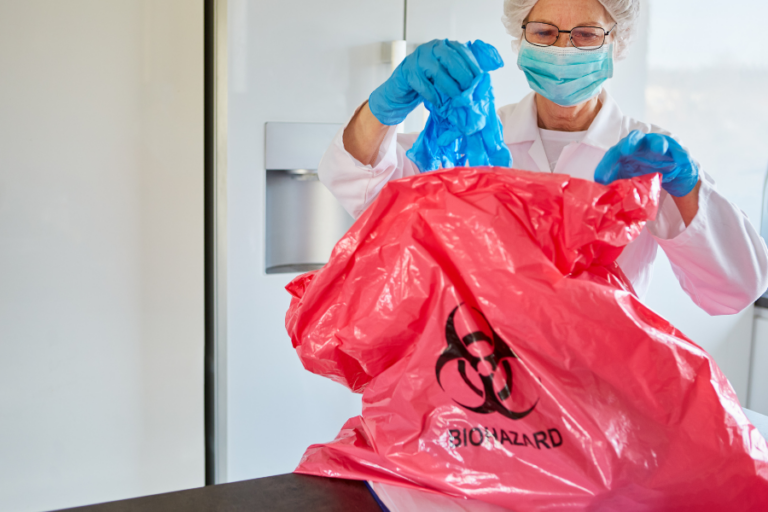
Medical waste disposal management is the process of safely handling, separating, storing, transporting, and treating healthcare waste to prevent infections, injuries, and environmental contamination. Healthcare facilities must follow strict procedures when disposing of biohazard materials, sharps, pharmaceuticals, and pathological waste.
Proper disposal involves identifying the type of waste, placing it in approved containers, storing it securely, and working with licensed disposal providers. Facilities that follow correct procedures reduce safety risks, maintain regulatory compliance, and protect healthcare workers and patients.
This guide explains how healthcare facilities can safely manage medical waste, including Sharps Container Disposal, Pharmaceutical Waste Management, Hazardous Drug Disposal, Pathological Waste Disposal, and Regulated Medical Waste Management.
Why Proper Medical Waste Disposal Matters
Medical waste is very different from regular trash. It may contain blood, bodily fluids, infectious materials, chemicals, or used sharps such as needles and scalpels. If these materials are thrown away improperly, they can spread diseases or cause injuries.
Proper medical waste disposal management ensures that hazardous materials are handled safely from the moment they are generated until final treatment or destruction.
Healthcare facilities must focus on safe waste practices because they help:
-
Protect healthcare staff from accidental exposure
-
Reduce the risk of infections and injuries
-
Maintain compliance with federal and state regulations
-
Prevent environmental contamination
-
Protect waste handlers and sanitation workers
Facilities that maintain strong waste management practices also create a safer working environment and avoid unnecessary penalties during inspections.
In many healthcare environments, staff members already juggle many responsibilities. Having a clear waste management system—and the support of experienced biohazard waste disposal services—can make compliance much easier to maintain.
Many healthcare facilities review their waste handling procedures regularly to avoid compliance issues. If your facility wants to make sure everything is handled properly, the team at Mercy Medical Waste can help evaluate your current waste process and recommend safer solutions.
Types of Medical Waste in Healthcare Facilities

Before waste can be disposed of correctly, it must be identified. Different types of medical waste require different treatment methods.
Biohazard Waste
Biohazard waste includes materials contaminated with blood or infectious agents. Common examples include blood-soaked bandages, gloves, cultures, and laboratory samples.
Facilities often rely on professional biohazard waste disposal services to ensure these materials are handled, transported, and treated according to regulations.
Sharps Waste
Sharps include items capable of puncturing the skin, such as needles, syringes, lancets, and scalpels. These items present a serious injury risk and must always be placed in approved containers.
Proper Sharps Container Disposal ensures that used sharps are safely contained and processed without exposing staff or sanitation workers to injuries.
Pathological Waste
Pathological waste includes human tissues, organs, body parts, and surgical specimens. Because these materials may contain infectious agents, proper Pathological Waste Disposal is necessary.
Hospitals and surgical centers typically generate this type of waste and must follow specific storage and treatment procedures.
Pharmaceutical Waste
Unused medications, expired drugs, and contaminated pharmaceutical materials fall under Pharmaceutical Waste Management. Some medications can harm water systems or wildlife if disposed of improperly.
Facilities must separate these materials from general waste and follow guidelines for safe disposal.
Hazardous Drug Waste
Hazardous medications used in treatments such as chemotherapy must be handled carefully. Proper Hazardous Drug Disposal protects healthcare workers from exposure to toxic substances.
These materials often require specialized containers and disposal processes.
Regulated Medical Waste
Many healthcare facilities deal with materials categorized under Regulated Medical Waste Management. This category includes waste that may pose a risk of infection during handling or transport.
Regulated waste often includes items contaminated with blood, cultures, pathological waste, and sharps.
Step-by-Step Process for Proper Medical Waste Disposal
Healthcare facilities should follow a structured process when handling medical waste. A consistent system ensures safety and regulatory compliance.
1. Waste Identification
The first step is identifying the type of waste being generated. Staff must understand the difference between general waste, regulated medical waste, pharmaceutical waste, and sharps.
Training employees to recognize these categories prevents mistakes that could lead to safety hazards.
2. Waste Segregation
Segregation means separating waste at the point where it is created. This step is one of the most important parts of medical waste disposal management.
Different containers should be used for different types of waste. For example:
-
Red bags for biohazard waste
-
Puncture-resistant containers for sharps
-
Secure containers for hazardous drugs
-
Labeled bins for pharmaceutical waste
Correct segregation prevents contamination and simplifies disposal later.
3. Safe Storage
Once waste is separated, it must be stored safely until collection. Storage areas should be secure, clearly labeled, and accessible only to authorized staff.
Facilities must also follow guidelines regarding storage time and temperature, depending on the type of waste.
Working with a trusted partner like Mercy Medical Waste can help healthcare facilities establish proper storage procedures and maintain compliance with safety regulations.
Healthcare facilities new to regulated disposal can review how medical waste disposal works to understand the process from collection to treatment.
4. Transportation and Collection
Medical waste should only be transported by licensed providers. Professional disposal companies ensure waste is moved safely from the facility to the treatment site.
Reliable biohazard waste disposal services help healthcare organizations maintain proper documentation, tracking, and regulatory compliance throughout the transportation process.
5. Treatment and Final Disposal
Medical waste must be treated before final disposal to eliminate harmful pathogens. Common treatment methods include autoclaving, incineration, and chemical treatment.
These processes ensure waste is neutralized before being placed in landfills or other approved disposal locations.
Proper treatment completes the cycle of responsible medical waste disposal management.
Common Medical Waste Disposal Mistakes Healthcare Facilities Make
Common Mistakes Healthcare Facilities Should Avoid
Even well-run facilities can make mistakes when handling medical waste. These errors often occur due to lack of training or unclear procedures.
Some common issues include mixing regulated waste with general trash, improper labeling, or overfilling sharps containers.
Healthcare facilities can reduce these risks by improving staff training, conducting regular audits, and working with experienced Regulated Medical Waste Management providers.
Regular reviews help ensure that waste handling practices remain consistent and compliant.
If you’re unsure whether your current waste process meets compliance standards, it may be a good time to review it. Healthcare facilities can request a quick medical waste service quote from Mercy Medical Waste to better understand safe and compliant disposal options.
Training Staff on Waste Handling
Training is one of the most important parts of safe waste management. Every healthcare worker should understand how to identify, separate, and dispose of medical waste correctly.
Training programs should cover:
-
Waste classification
-
Proper container use
-
Handling procedures for sharps and hazardous drugs
-
Emergency procedures for spills or exposure
-
Documentation and compliance requirements
Facilities that invest in regular training create a safer environment for both staff and patients.
Healthcare teams that feel confident about waste handling are far less likely to make mistakes during busy shifts.
Proper training helps healthcare workers avoid compliance violations during inspections. Dental clinics in particular must follow strict OSHA standards when handling sharps and contaminated materials. You can also read our guide on Top OSHA Dental Waste Disposal Mistakes and How to Avoid Them to understand the most common compliance issues dental practices face.
The Role of Professional Medical Waste Providers

Managing medical waste internally can be complex. Regulations vary by state, and healthcare facilities must maintain strict documentation and safety standards.
Working with an experienced provider simplifies the process. Providers manage collection schedules, ensure proper treatment, and help facilities stay compliant with regulations.
Healthcare facilities that partner with companies like Mercy Medical Waste gain access to reliable waste handling systems and regulatory expertise.
Many healthcare managers find that reviewing their current waste handling procedures with a professional service provider can reveal small improvements that make a big difference in safety and compliance.
Creating a Strong Waste Management Plan
A structured waste management plan helps healthcare facilities maintain consistency and reduce risks. The plan should outline clear procedures for handling every type of medical waste generated within the facility.
Effective waste management plans typically include:
-
Clear waste classification guidelines
-
Proper container placement throughout the facility
-
Staff training programs
-
Routine inspections and audits
-
Documentation and compliance tracking
When facilities follow a well-organized plan, medical waste disposal management becomes easier and more reliable.
Regular reviews also help facilities stay prepared for inspections and regulatory updates.
Environmental Responsibility in Medical Waste Disposal
Healthcare organizations play an important role in protecting the environment. Improper disposal of pharmaceuticals, chemicals, and biohazard waste can contaminate water systems and harm wildlife.
Responsible waste practices help reduce environmental impact while maintaining safe healthcare operations.
Proper Pharmaceutical Waste Management and Hazardous Drug Disposal are especially important for protecting ecosystems and preventing contamination.
Healthcare facilities that focus on safe waste practices contribute to healthier communities and cleaner environments.
Healthcare facilities that generate biohazard materials, sharps, or pharmaceutical waste often benefit from scheduled pickup services. You can schedule a medical waste pickup with Mercy Medical Waste to ensure your facility stays compliant and waste is removed safely and on time.
FAQ Schema Questions
1. What is medical waste disposal management in healthcare facilities?
Medical waste disposal management refers to the process of identifying, separating, storing, transporting, and treating medical waste safely to prevent infections and environmental contamination.
2. What types of medical waste require special disposal?
Healthcare facilities must properly dispose of several waste types, including biohazard waste, sharps, pharmaceutical waste, pathological waste, hazardous drugs, and regulated medical waste.
3. How should sharps be disposed of in healthcare facilities?
Sharps such as needles, syringes, and scalpels must be placed in approved puncture-resistant containers. Proper Sharps Container Disposal prevents injuries and protects healthcare workers.
4. Why is pharmaceutical waste management important?
Improper disposal of medications can contaminate water systems and harm the environment. Pharmaceutical Waste Management ensures unused or expired drugs are handled safely.
5. Who can handle regulated medical waste disposal?
Licensed providers offering biohazard waste disposal services manage collection, transportation, treatment, and documentation to ensure healthcare facilities remain compliant with regulations.
Final Thoughts
Proper medical waste handling is essential for every healthcare facility. Safe practices protect staff, patients, waste handlers, and the environment.
By identifying waste correctly, separating it at the source, storing it safely, and using licensed disposal providers, healthcare facilities can maintain full compliance with safety regulations.
Consistent medical waste disposal management ensures that hazardous materials are handled responsibly from start to finish.
Healthcare organizations that want a safer and more efficient waste system often benefit from working with experienced providers who understand regulatory requirements and industry best practices.
If your healthcare facility wants to simplify compliance and improve waste handling processes, Mercy Medical Waste can help create a reliable system designed for healthcare environments.
Request a service consultation or connect with our team today to schedule medical waste support for your facility.
