
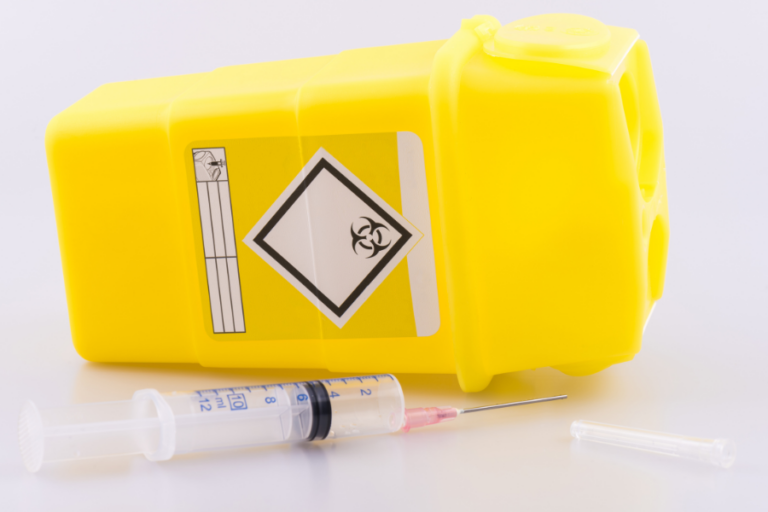
People who use insulin should never throw used needles into household trash or recycling bins. Insulin needle disposal should always be done using an approved sharps container and a safe disposal method to help prevent injuries, reduce the spread of infection, and comply with local waste regulations. Following the right steps protects family members, sanitation workers, healthcare professionals, and your community.
Millions of people rely on insulin every day to manage diabetes. Along with regular injections comes the responsibility of handling used needles safely. If you’re unsure what to do after an injection or wondering where to take a full sharps container, this guide explains the safest disposal practices, answers common questions, and outlines when professional disposal services may be the right choice.
Why Safe Insulin Needle Disposal Matters
Used insulin needles remain sharp even after a single use. Throwing them loosely into the trash creates unnecessary risks for anyone who handles waste. A needle stick injury can expose someone to bloodborne pathogens and lead to costly medical evaluations.
Proper disposal also helps keep public spaces, recycling facilities, and landfills safer. Whether you manage diabetes at home or care for a family member, developing safe disposal habits should become part of your daily routine.
Healthcare organizations and local waste authorities recommend using approved sharps containers instead of makeshift alternatives whenever possible.
What Counts as Medical Sharps?
Medical sharps include any item capable of puncturing the skin after medical use.
Examples include:
- Insulin needles
- Pen needles
- Syringes
- Lancets
- Auto-injectors with exposed needles
- Certain infusion set needles
Even if a needle appears clean, it should always be treated as potentially infectious.
How to Dispose of Insulin Needles Safely at Home
Safe disposal starts immediately after your injection.
Step 1: Never Recap the Needle
Recapping increases the chance of accidental needle sticks. Remove the needle carefully and place it directly into a sharps container.
Step 2: Use an FDA-Cleared Sharps Container
An approved sharps container is puncture-resistant, leak-resistant, and has a secure lid. These containers are specifically designed to safely hold used needles.
If an approved container is temporarily unavailable, some local health departments allow a heavy-duty plastic container with a secure screw-top lid. Always check your local regulations before using an alternative.
Step 3: Store the Container Safely
Keep the container:
- Away from children
- Away from pets
- In a dry location
- Upright whenever possible
Avoid placing it where it may tip over.
Step 4: Do Not Overfill
Replace or dispose of the container when it reaches approximately three-quarters full. Overfilled containers increase the chance of accidental injury.
Where Should You Take a Full Sharps Container?
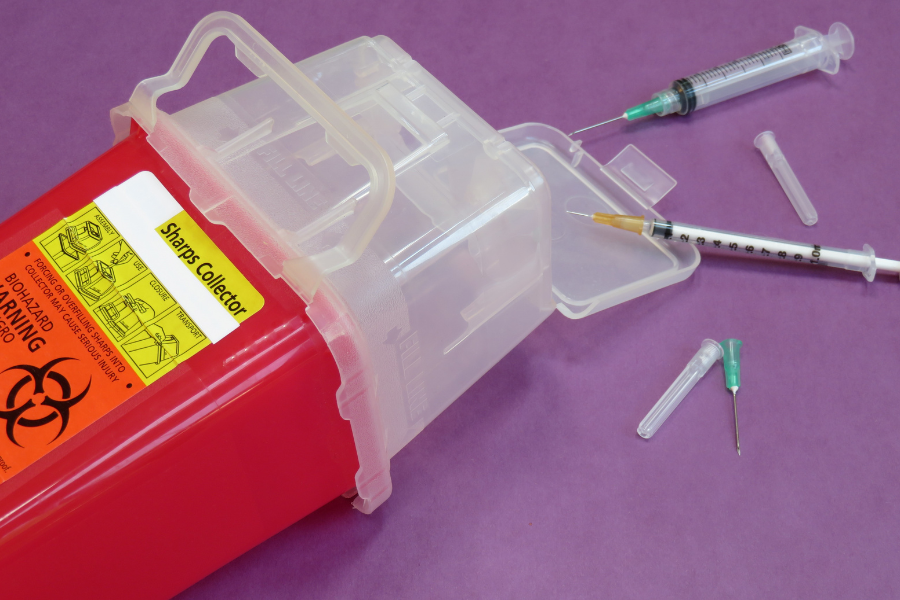
Many communities provide approved disposal locations for household medical sharps.
These may include:
- Local pharmacies
- Healthcare clinics
- Hospitals
- Community collection programs
- Household hazardous waste facilities
- Professional Sharps Container Disposal Service providers
Availability varies by city and state, so checking local regulations is always recommended.
Need a Safe Disposal Solution?
Using a professional disposal partner helps ensure your filled sharps containers are handled according to current regulations. Mercy Medical Waste provides dependable collection options for healthcare providers, businesses, and organizations that generate regulated medical waste.
Request a disposal solution through our website to schedule service that fits your needs.
Common Mistakes People Make
Many people unknowingly dispose of insulin needles incorrectly.
Avoid these common mistakes:
- Throwing loose needles into household garbage
- Placing needles in recycling bins
- Flushing needles down toilets
- Breaking or bending needles before disposal
- Overfilling sharps containers
- Leaving containers without secure lids
Even one improperly discarded needle can create a hazard for someone else.
What Happens After Sharps Are Collected?
Once collected, used sharps become part of the regulated medical waste stream.
Licensed waste management companies transport containers using approved handling procedures. The waste is then treated using methods designed to eliminate biological hazards before final disposal.
This process helps protect sanitation workers, healthcare staff, transportation personnel, and the environment.
Learn how licensed providers safely handle regulated waste in How to Manage Medical Waste in a Professional Way.
Can You Throw Insulin Needles Away in Household Trash?
In many locations, loose needles should never be placed directly into household trash.
Some communities allow properly sealed sharps containers to be disposed of with household waste, while others require drop-off programs or mail-back services.
Because regulations differ, always verify local disposal requirements before disposing of filled containers.
When Should You Use Professional Sharps Disposal Services?
While many households use local collection programs, professional Sharps disposal services become especially valuable when larger amounts of medical sharps are generated.
These services are commonly used by:
- Medical clinics
- Dental offices
- Veterinary practices
- Long-term care facilities
- Home healthcare providers
- Businesses with employee health programs
Professional services help maintain compliance with waste regulations while reducing handling risks.
Want to learn more about safe handling of medical sharps? Read Sharps Disposal 101: What Clinics, Labs, and Vets Need to Know.
Need Help Managing Regulated Medical Waste?
Whether you generate small or large volumes of medical sharps, having a reliable disposal plan helps reduce safety risks and simplifies compliance.
Contact Mercy Medical Waste online to request information about scheduled pickup or disposal options for your facility.
How to Find Safe Sharps Disposal Near You
Many people search online using phrases like sharps disposal near me or medical sharps disposal near me when their container becomes full.
When choosing a provider or collection site, consider:
- State compliance requirements
- Licensed transportation
- Proper treatment methods
- Convenient pickup or drop-off options
- Experience handling regulated medical waste
A licensed disposal company can explain available services and help determine the right disposal option based on your needs.
How Mercy Medical Waste Helps
Mercy Medical Waste supports healthcare facilities, businesses, and organizations with reliable regulated waste management services.
Services include safe handling of:
- Regulated medical waste
- Sharps containers
- Pharmaceutical waste
- Biohazard waste
- Compliance support
- Scheduled waste collection
Every collection follows established safety procedures designed to help customers meet disposal requirements while protecting employees and the public.
Frequently Asked Questions
Can insulin needles go into recycling?
No. Needles should never be placed in recycling bins.
How often should I replace my sharps container?
Replace it when it reaches about three-quarters full or according to the manufacturer’s instructions.
Can I reuse insulin needles?
Healthcare professionals generally recommend using a new sterile needle for each injection unless instructed otherwise by your healthcare provider.
What should I do if someone is accidentally stuck by a used needle?
Wash the area immediately with soap and water and seek prompt medical advice.
Final Thoughts
Safe Insulin Needle Disposal is an important part of diabetes care. Using an approved sharps container, following local disposal rules, and choosing licensed disposal providers when needed helps reduce injuries and keeps communities safer. Whether you’re managing diabetes at home or overseeing medical waste for a healthcare facility, responsible disposal protects everyone involved.
If you’re searching for dependable waste management solutions for regulated medical waste, Mercy Medical Waste provides dependable disposal options backed by industry experience. Visit our website to request service or speak with our team about the right disposal solution for your facility.
