
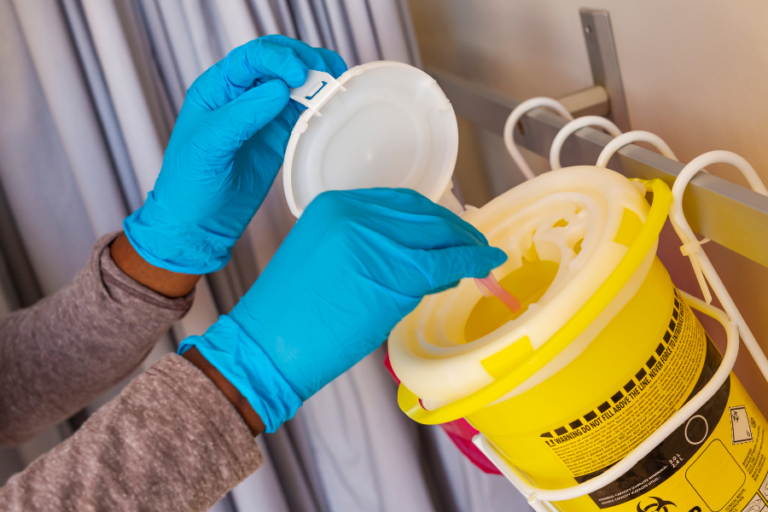
Finding a reliable sharps disposal service near you starts with one simple question: Can the provider safely collect, transport, and dispose of used needles and other sharps according to applicable medical waste requirements? A good service should provide the right containers, scheduled pickups, safe handling, clear documentation, and disposal methods suited to your type and volume of waste.
For medical offices, dental practices, laboratories, veterinary clinics, pharmacies, home healthcare providers, and other facilities, proper sharps disposal is not something to leave to chance. Used needles, syringes, lancets, scalpels, and other sharp medical items can cause needle-stick injuries and may expose workers, patients, waste handlers, and the public to biological hazards.
This guide explains what to check before choosing a provider, what questions to ask, and how to compare service options without making the decision based on price alone.
What Is Sharps Disposal?
Sharps disposal is the safe collection, handling, transportation, treatment, and final disposal of used medical items that can cut or puncture the skin.
Common examples include:
- Used needles and syringes
- Lancets
- Disposable scalpels and blades
- Broken contaminated glass
- Certain medical instruments with sharp edges
- Other puncture-resistant healthcare waste
These materials may become part of the facility’s regulated medical waste stream and need to be separated from ordinary trash. Placing used needles in a regular garbage bin can create serious risks for cleaning staff, waste collectors, and anyone who may come into contact with the waste.
Sharps disposal involves the safe collection, handling, transportation, treatment, and final disposal of used needles and other sharp medical items. If you want a deeper explanation of the process, read our guide to Sharps Disposal 101: What Clinics, Labs, and Vets Need to Know.
Why Choosing the Right Sharps Disposal Provider Matters
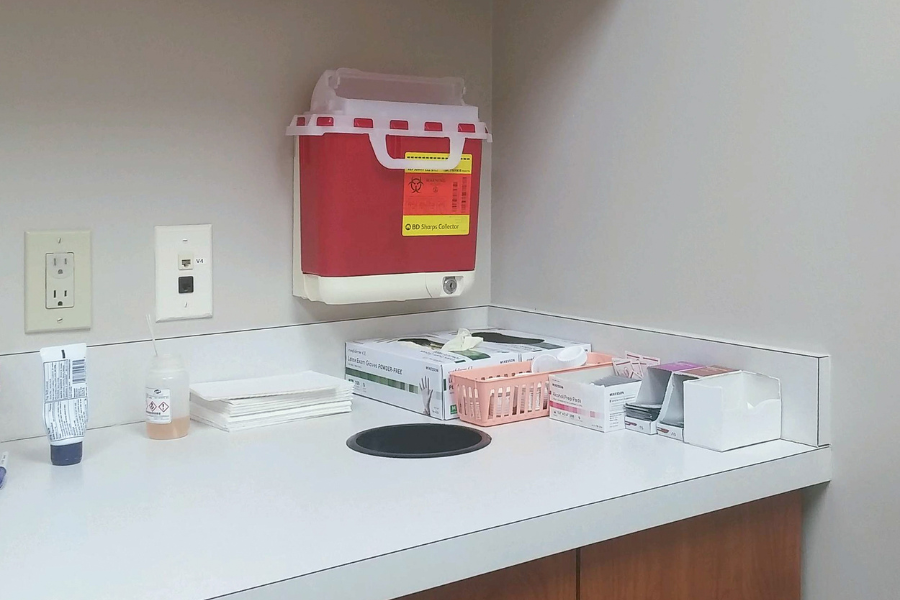
A reliable provider does more than pick up a container. The service should fit your facility’s waste volume, collection schedule, storage space, and compliance responsibilities.
Poorly managed sharps can result in:
- Needlestick or puncture injuries
- Exposure to potentially infectious materials
- Improper handling during transportation
- Problems with waste storage
- Regulatory concerns
- Additional cleanup or disposal costs
Good medical waste management begins where the waste is generated. Staff should place sharps directly into an appropriate sharps container instead of handling them repeatedly or trying to separate them later.
The disposal company then becomes an important part of the process by providing suitable containers, collection services, transportation, treatment, and final disposal.
How Do You Find Sharps Disposal Near Me?
When searching online for sharps disposal near me, don’t choose the first company that appears in the results. Search results can help you create a shortlist, but you should still check the provider’s services, service area, collection process, documentation, and reputation.
Start by asking:
Does the company serve my location and type of facility?
A provider that works mainly with large hospitals may not offer the right pickup options for a small dental office or medical practice. Similarly, a business generating large quantities of medical waste may need a different collection schedule from a small clinic.
Check whether the provider works with facilities similar to yours and whether they can accommodate your expected waste volume.
Searching for a local provider is a useful first step, but you should also compare service areas, pickup options, waste types, pricing, and customer support. For more guidance, see our article on How to Choose the Right Medical Waste Disposal Service for Clinic.
1. Check What the Service Actually Includes
Before signing up, understand exactly what you are paying for.
A proper sharps container disposal service may include container delivery, collection, transportation, treatment, and disposal. However, services differ between providers, so ask for the details in writing.
Important questions include:
- Are sharps containers provided?
- What container sizes are available?
- How are full containers collected?
- Are pickups scheduled or on demand?
- What happens if a container fills sooner than expected?
- Is transportation included?
- Is treatment included?
- What documentation is provided after collection?
- Are there minimum service requirements?
Clear answers make it easier to compare providers and avoid unexpected charges later.
Need a dependable sharps collection option?
Request a quote from Mercy Medical Waste to discuss your facility’s sharps disposal requirements and find a service arrangement that fits your needs.
2. Look at Container Safety and Handling Procedures
The container is one of the most important parts of sharps disposal.
Sharps containers should be designed to reduce the chance of punctures, spills, and accidental contact with the contents. Staff should know where containers are located and when they need to be replaced or collected.
A reliable provider should be able to explain:
- Which containers are appropriate for your waste
- Where containers should be placed
- How full is too full
- How containers are closed or secured
- How full containers are removed
- How replacement containers are supplied
Facilities should also follow applicable workplace and waste-handling requirements when using and storing sharps containers.
3. Ask How the Company Handles Regulated Medical Waste
Sharps may be only one part of a facility’s waste stream. Depending on the type of business, you may also generate contaminated materials, pharmaceutical waste, pathological waste, or other regulated waste.
Ask the provider whether it can handle the different categories your facility produces.
A company experienced in medical waste disposal should be able to explain its collection and treatment process in straightforward language. You should not have to guess what happens after the waste leaves your facility.
This is especially important if your facility is growing. A provider that can support additional waste streams may save you from having to coordinate several separate waste vendors.
4. Compare Medical Waste Disposal Cost Carefully
Price matters, but the lowest quote is not always the least expensive option over time.
Medical waste disposal costs can depend on factors such as waste volume, container size, pickup frequency, location, type of waste, service requirements, and additional fees.
When comparing quotes, ask what is included.
For example, one company may advertise a low monthly rate but charge separately for containers, additional pickups, transportation, or other services. Another provider may include more of these costs in its standard service.
Instead of asking only, “How much does sharps disposal cost?” ask:
“What is included in the total service price?”
That question gives you a much clearer basis for comparison.
Costs can vary based on waste volume, container size, pickup frequency, location, and the type of service required. If you want a closer look at pricing factors, read Medical Waste Disposal Cost: What to Expect & How to Save Money.
5. Check the Company’s Compliance and Documentation
Medical waste handling involves more than simply moving waste from one location to another.
Ask potential providers how they support proper handling, transportation, treatment, and disposal. You should also understand what records or documentation you receive after collection.
Depending on your location and waste type, different federal, state, and local requirements may apply. Requirements can also vary based on the type of facility and material being discarded.
A trustworthy provider should be comfortable explaining its process and directing customers to the appropriate regulatory information when necessary.
6. Read Reviews—but Know What to Look For
Online reviews can provide useful clues, but don’t judge a provider only by its star rating.
Look for comments about:
- Pickup reliability
- Customer support
- Billing transparency
- Container delivery
- Scheduling
- Communication
- Problem resolution
Repeated complaints about missed pickups or poor communication deserve attention.
At the same time, one negative review does not automatically mean a company is unreliable. Look for patterns across multiple reviews and consider how recently the feedback was posted.
7. Consider Your Pickup Schedule
Every facility produces waste differently.
A small healthcare office may need less frequent collection, while a busy clinic, hospital department, laboratory, or veterinary practice may need regular pickups.
Ask whether the company offers:
- Scheduled pickups
- Recurring service
- Flexible pickup frequency
- Additional pickups when needed
- Container replacement service
Your disposal schedule should prevent containers from sitting unnecessarily long while also avoiding unnecessary pickups.
Your pickup schedule should match the amount of waste your facility produces. If you’re unsure how frequently collections should be arranged, our guide, How Often Should Your Clinic Schedule Medical Waste Pickups? provides additional guidance.
Ready to simplify your sharps disposal?
Contact Mercy Medical Waste to discuss collection options for your facility. The right service can help your staff spend less time worrying about waste logistics and more time focusing on their daily work.
8. Ask About Emergency or One-Time Needs
Not every facility needs a long-term contract.
You may need sharps disposal because of a temporary medical event, office closure, renovation, change in operations, or unexpected increase in waste.
Before choosing a provider, ask whether one-time or short-term services are available.
This can be particularly useful for facilities that do not generate enough waste to justify a traditional recurring pickup schedule.
9. Make Sure Your Staff Understands the Process
Even the best disposal service cannot prevent problems if sharps are handled incorrectly inside the facility.
Staff should understand the basic workflow:
Use the sharp → place it immediately into the approved sharps container → secure the container when required → store it appropriately → arrange collection.
Do not bend, break, recap, or otherwise manipulate used needles unless a specific procedure requires it and the applicable safety requirements are followed.
Training and clear workplace procedures are important parts of effective medical waste management.
What Should You Ask Before Hiring a Sharps Disposal Company?
If you are comparing several companies, keep the conversation simple. Ask each provider the same questions so you can make a fair comparison.
Quick checklist
- Do you serve my area?
- Do you provide sharps containers?
- What container sizes are available?
- How frequently can you collect them?
- Do you offer one-time service?
- What types of regulated medical waste do you accept?
- What treatment and disposal process is used?
- What documentation is provided?
- Are transportation and container costs included?
- Are there additional fees?
- Can the service change as our waste volume changes?
- Who should we contact when we need help?
A provider that answers these questions clearly is much easier to evaluate than one that gives vague responses.
Sharps Container Disposal vs. Regular Trash
Used sharps should never be treated like ordinary household or office waste.
A needle placed into a regular trash bag can puncture the bag and injure someone handling it later. This risk can extend beyond healthcare workers to janitorial staff, waste collection workers, and members of the public.
Proper sharps container disposal keeps contaminated sharp objects contained from the point of generation through collection and treatment.
For healthcare facilities, this is not simply a matter of keeping the workplace clean. It is an important part of protecting people who may come into contact with the waste.
What Makes a Sharps Disposal Company Reliable?
A reliable provider should offer more than a container and a pickup date.
Look for a company that provides:
- Clear service terms
- Appropriate sharps containers
- Reliable collection schedules
- Proper waste handling
- Transparent pricing
- Responsive customer service
- Appropriate documentation
- Services that fit your facility
The goal is to create a disposal process that your staff can follow consistently without unnecessary confusion.
Why Mercy Medical Waste Can Be a Practical Choice
Mercy Medical Waste provides waste management services for organizations that need safe and responsible handling of healthcare-related waste.
If your facility needs a Sharps Container Disposal Service, it is worth discussing your waste volume, container requirements, pickup frequency, and other disposal needs before selecting a service plan.
The right provider should make the process easier to manage while helping your facility maintain safe waste-handling practices.
Get Started With the Right Service
Request a quote from Mercy Medical Waste and discuss your sharps collection needs. A clear service plan can help your team manage used sharps safely and keep waste handling organized.
Frequently Asked Questions
What is a sharps container disposal service?
A Sharps Container Disposal Service handles the collection and appropriate management of containers holding used needles and other potentially hazardous sharp medical items. Services may include container supply, pickup, transportation, treatment, and disposal.
Can I search for sharps disposal near me online?
Yes. Searching for sharps disposal near me can help you find local providers. However, verify that the company serves your facility type, offers the service you need, and follows applicable waste-handling requirements before hiring it.
How much does medical waste disposal cost?
The medical waste disposal cost varies depending on factors such as waste type, volume, container size, pickup frequency, location, and service requirements. Ask for an itemized quote so you understand what is included.
Can small medical offices use professional sharps disposal?
Yes. Medical offices, dental practices, veterinary clinics, laboratories, pharmacies, and other facilities may use professional disposal services depending on their waste needs and applicable local requirements.
What should I do with a full sharps container?
Follow your facility’s established waste procedure and the container manufacturer’s instructions. Do not attempt to empty, reopen, or manually sort the container. Arrange collection through an appropriate waste service.
Final Thoughts
Finding a reliable sharps disposal provider is mainly about asking the right questions. Don’t choose a company based only on location or the cheapest quote. Check the collection process, container options, pickup schedule, documentation, waste types accepted, pricing, and customer support.
A good Sharps Container Disposal Service should fit naturally into your facility’s daily workflow. When sharps are placed into appropriate containers and collected through a dependable disposal process, your team can reduce unnecessary handling and help protect everyone who comes into contact with the waste.
If you are comparing sharps disposal, medical waste disposal, or broader medical waste management services, start with your facility’s actual needs and then compare providers based on safety, reliability, transparency, and service quality.
Mercy Medical Waste is ready to help you plan a practical sharps disposal solution for your facility. Request a quote today and take the next step toward safer, organized waste handling.
