
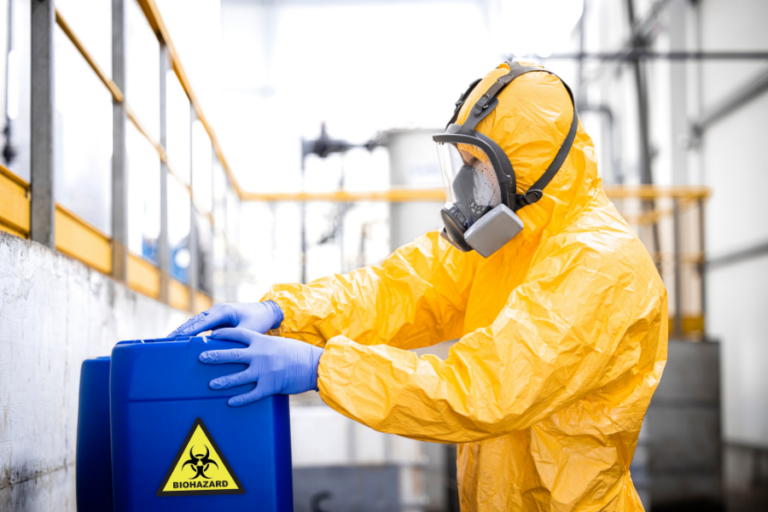
Commercial chemical waste must be handled, stored, transported, and disposed of carefully to protect employees, customers, the environment, and the business itself. Commercial chemical waste disposal involves more than simply throwing unwanted chemicals into regular trash or pouring liquids down a drain. Businesses need to identify their waste, separate incompatible materials, use appropriate containers, and work with qualified waste management providers when disposal requires specialized handling.
For businesses that generate chemical waste regularly, having a clear disposal process can reduce safety risks and help maintain compliance with applicable federal, state, and local requirements. Mercy Medical Waste helps businesses manage regulated waste streams with practical disposal solutions based on the type of material being generated.
What Is Commercial Chemical Waste?
Commercial chemical waste includes unwanted, expired, contaminated, or unusable chemical products generated through business operations. The exact waste stream varies by industry.
Examples can include:
- Cleaning and disinfecting chemicals
- Laboratory chemicals and reagents
- Solvents and chemical solutions
- Certain pharmaceuticals and chemical products
- Contaminated materials containing hazardous chemicals
- Expired chemical products
- Chemical containers with residual contents
Not every chemical waste product is classified in the same way. Its properties, concentration, quantity, and intended use can affect how it must be managed. Businesses should therefore avoid assuming that all chemical waste can be handled through ordinary commercial garbage services.
Businesses such as laboratories may generate several types of regulated waste. For more information, see this guide to safe laboratory waste disposal.
Why Proper Chemical Waste Disposal Matters
Improper disposal can create several problems. Chemical products placed in regular trash may expose sanitation workers or other people to harmful substances. Chemicals poured into sinks or outdoor drains can also enter wastewater systems or the environment.
A proper disposal process helps businesses address three important concerns: worker safety, environmental protection, and regulatory compliance.
Businesses should also maintain records of their waste management activities where required. Documentation can help demonstrate that regulated materials were handled through appropriate channels and can make internal waste audits easier.
Because disposal requirements can vary by waste type and location, businesses should understand their applicable requirements and follow commercial waste disposal laws.
How Should Businesses Handle Chemical Waste?
The first step is to identify what the waste actually is. Check the product label and Safety Data Sheet (SDS), and determine whether the material is hazardous or subject to specific disposal requirements.
Chemical waste should generally be:
- Identified before disposal.
- Kept in suitable, compatible containers.
- Clearly labelled according to applicable requirements.
- Stored in an appropriate area away from incompatible materials.
- Separated when different waste streams should not be mixed.
- Collected and transported through an appropriate waste service when required.
Never mix chemicals simply to reduce the number of containers. Some substances can react when combined, creating heat, toxic vapours, fire hazards, or other dangerous conditions.
Commercial Chemical Waste Disposal vs. Medical Waste
Chemical waste and medical waste are different waste streams, although some businesses may generate both.
Medical waste can include items such as contaminated materials, certain pharmaceutical waste, pathological materials, and sharps. Chemical waste, on the other hand, is generally associated with the chemical properties of the discarded material.
Some healthcare facilities, laboratories, dental practices, veterinary facilities, and other organizations may produce multiple types of regulated waste. This is where an organized medical waste management program becomes useful. Separating waste correctly helps ensure that each material reaches the appropriate treatment or disposal process.
Requirements for medical waste can differ by location, so healthcare facilities should review medical waste disposal requirements by state when developing their waste procedures.
What About Sharps Disposal?
Healthcare facilities and other businesses that use needles, lancets, blades, or similar items need a safe sharps management process.
If you have searched for sharps disposal near me, the important question is not only whether a company collects sharps. You should also check whether the service fits your business, what types of sharps it accepts, how it supplies containers, and how it handles collection.
Businesses that generate needles and other sharps can learn more about safe handling in this sharps disposal guide for clinics, labs, and veterinary facilities.
Sharps should never be placed loose into ordinary trash. Used needles and other sharp objects can cause needlestick injuries when improperly discarded.
Need reliable waste collection for your facility? Get a quote from Mercy Medical Waste for your waste disposal needs.
How Does Medical Waste Management Fit Into a Business Waste Plan?
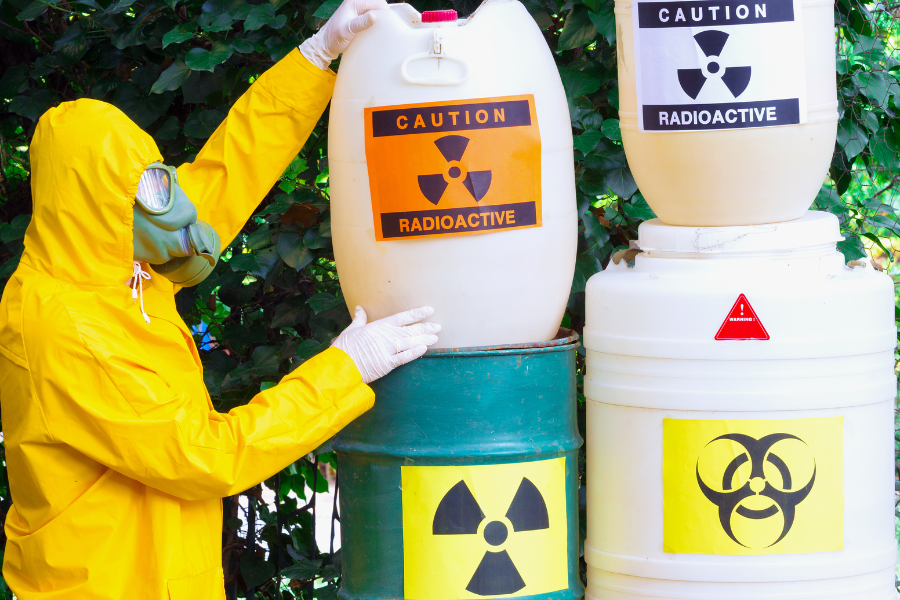
A strong medical waste management process starts with segregation at the point where waste is generated. Employees should know which container belongs to which waste stream and what materials must not be placed together.
Training is particularly important in healthcare and laboratory environments because several waste categories may be generated in the same facility.
A written waste procedure can cover:
- Which waste types the business generates
- Where each waste stream should be placed
- Container requirements
- Storage procedures
- Collection schedules
- Employee responsibilities
- Spill or exposure procedures
- Required documentation and records
This approach makes waste handling easier for employees and reduces confusion during daily operations.
How Much Does Medical Waste Disposal Cost?
Businesses often ask about medical waste disposal cost, but there is no single price that applies to every facility. Disposal pricing can depend on the type and amount of waste, collection frequency, container requirements, location, treatment method, and service arrangement.
For example, a small medical office generating limited quantities of regulated waste may have different needs from a hospital, laboratory, dental practice, or facility producing large volumes of sharps and contaminated materials.
Rather than choosing a service based only on the lowest advertised price, businesses should consider what is included. Ask whether containers, pickup, transportation, treatment, documentation, and other required services are part of the quoted arrangement.
Common Mistakes Businesses Should Avoid
Many waste problems happen because disposal is treated as an ordinary housekeeping task rather than a controlled business process.
Common mistakes include:
- Putting chemical containers in regular trash without checking requirements
- Pouring chemicals down drains
- Mixing incompatible chemicals
- Leaving waste containers open or improperly labelled
- Storing waste in unsuitable areas
- Putting sharps into ordinary garbage
- Assuming every type of medical waste follows the same disposal process
- Failing to train employees on waste segregation
- Choosing a waste service without confirming what materials it accepts
A simple review of your current waste streams can reveal where improvements are needed.
How to Choose a Commercial Waste Disposal Provider
When selecting a provider for commercial chemical waste disposal, ask clear questions before starting service.
Can the provider handle the specific waste your business generates? Does the service include appropriate containers and scheduled collection? What documentation is provided? Are employees given guidance about segregation and storage? Does the provider explain which materials require different handling?
The answers matter because waste disposal is not a one-size-fits-all service. Your provider should understand your waste streams and explain the process in terms your staff can follow.
Frequently Asked Questions
Can businesses put chemical waste in regular trash?
Not automatically. Some chemical products may have specific disposal requirements, while others may be subject to hazardous waste regulations. Businesses should identify the material and follow applicable requirements before disposal.
Can chemical waste be poured down a drain?
Do not assume that it is safe or permitted. Disposal through drains can create environmental and safety problems, and local wastewater requirements may restrict what can enter a drainage system.
Is medical waste the same as chemical waste?
No. They are separate waste categories, although some businesses may generate both. The appropriate handling method depends on the characteristics and classification of the waste.
How often should waste be collected?
Collection frequency depends on the volume generated, storage capacity, type of waste, applicable requirements, and the operational needs of the facility. A provider can help determine a practical schedule.
What should a business do with used sharps?
Used needles, lancets, and other sharps should be placed directly into an appropriate sharps container at the point of use. They should not be placed loose in ordinary trash or recycling.
Build a Safer Waste Disposal Process
Proper commercial chemical waste disposal starts with knowing what your business generates and ensuring each waste stream is handled through the correct process. Clear labelling, appropriate storage, employee training, safe segregation, and dependable collection can make waste management more consistent and reduce unnecessary risks.
Mercy Medical Waste supports businesses that need dependable solutions for regulated waste, including medical waste and sharps. Contact Mercy Medical Waste today to discuss your facility’s waste streams and find a practical collection and disposal solution.
Whether your business needs help with chemical waste, sharps, or broader medical waste management, taking action early can help prevent avoidable safety and compliance problems.
